Every mechanical switch does the same job. What changes is what your finger feels on the way down, and how much noise it makes getting there. There are three families, and you can rule one out in about a minute.
| Linear | Tactile | Clicky | |
|---|---|---|---|
| Feel | Smooth all the way down | A small bump partway down | A bump you can feel and hear |
| Sound | The quietest of the three | A soft knock | A sharp click on every press |
| Suits | Games, fast repeated presses | Long typing sessions | Typing alone, for the fun of it |
Linear
Nothing happens on the way down except the spring pushing back. That makes a linear easy to press quickly and to press twice in a row, which is why most gaming boards ship with them. The cost is feedback: you learn where the key registers by habit, not by feel, and many people bottom out every key.
Tactile
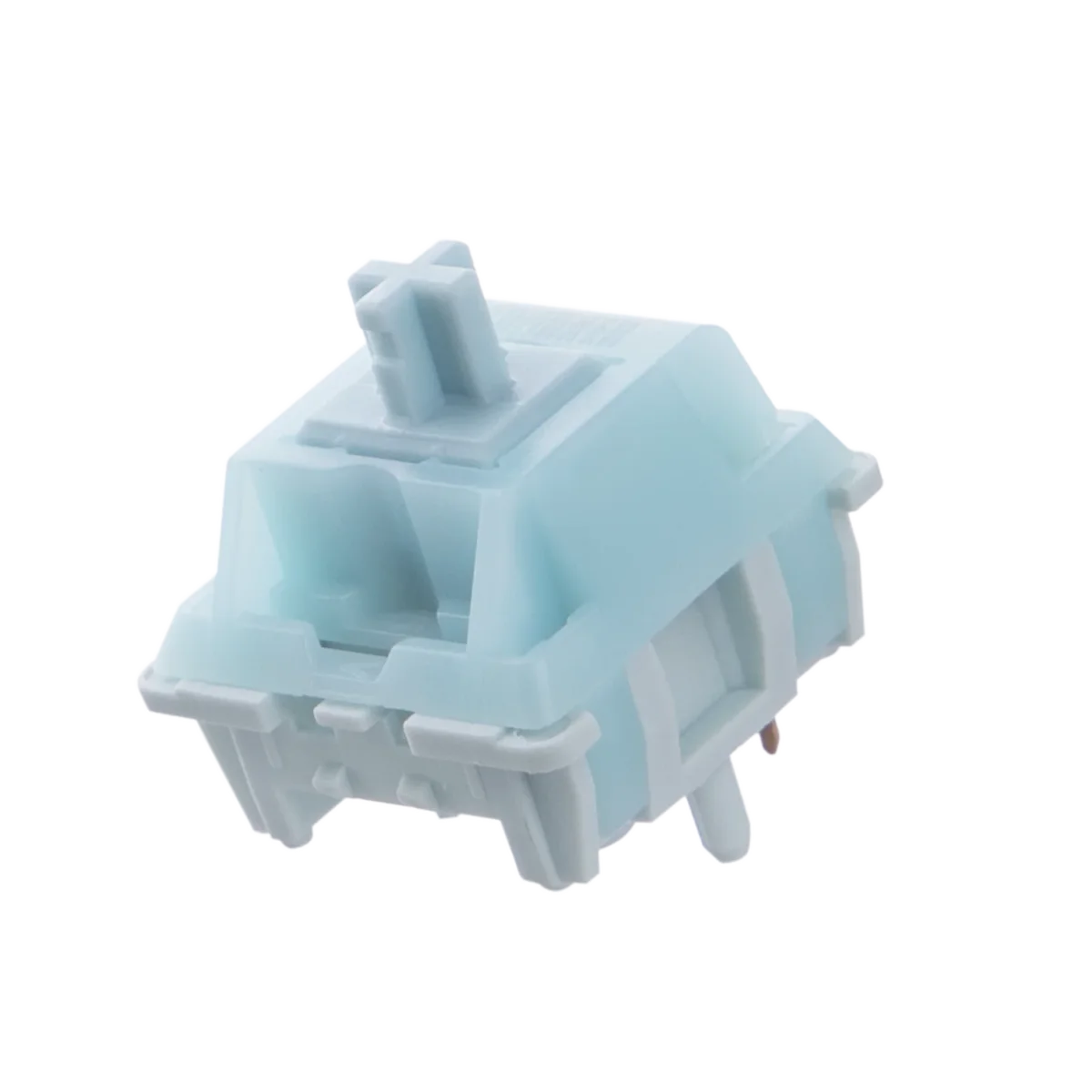
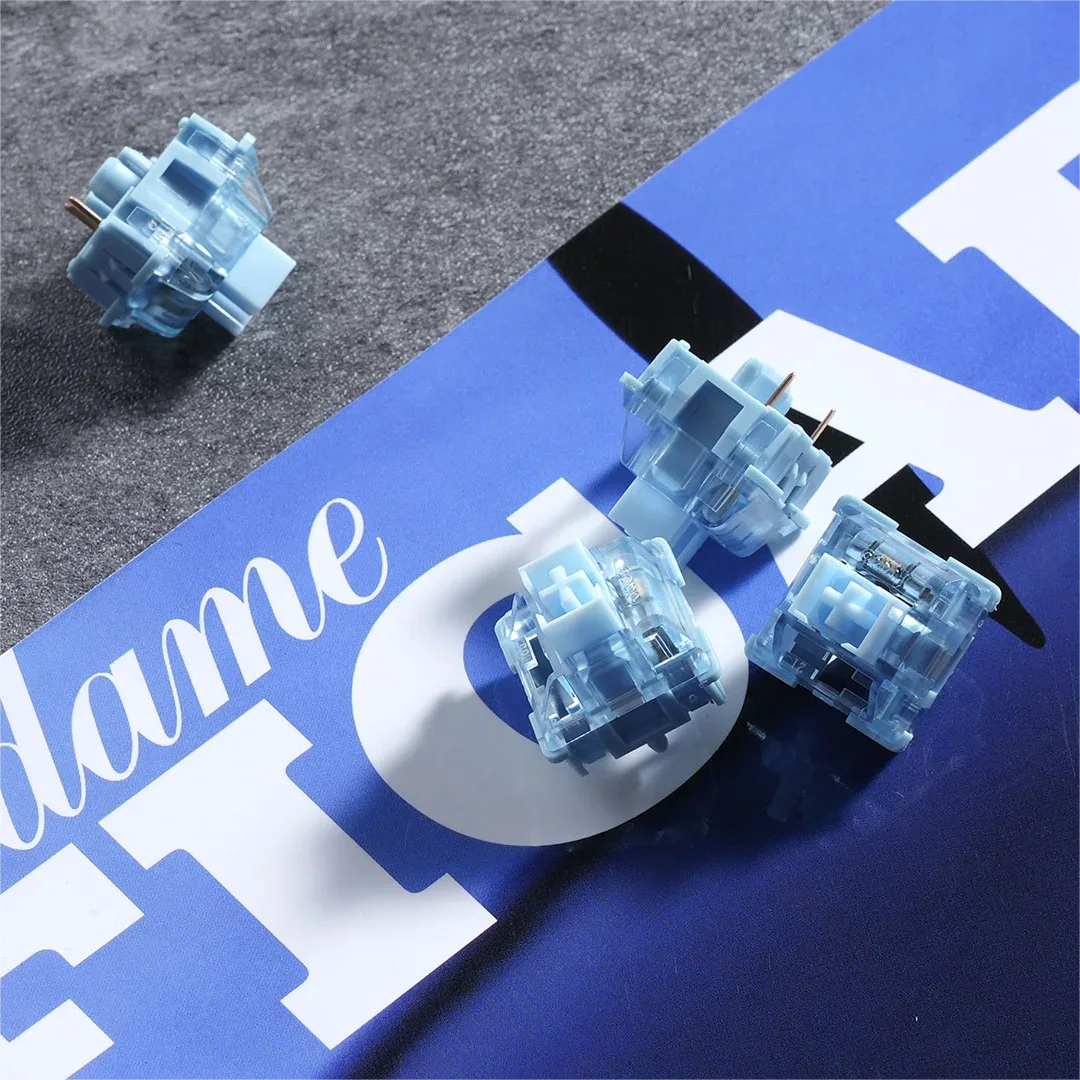
A tactile switch has a bump around the point where the key registers. You feel the press happen, so you can type without hammering each key to the bottom. The bump can be gentle or sharp. The Akko Cream Blue Pro on our shelf is a mild one: 45 gf to press and 55 gf at the bump.
Clicky
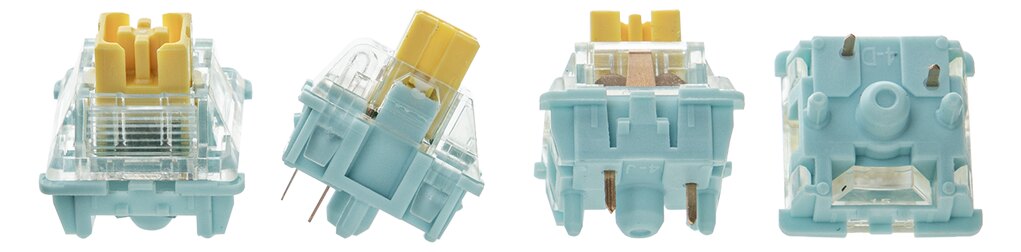
A clicky switch adds a sound to the bump. It is the typewriter feel, and it is loud. Kailh's Box Jade and Box Navy use a click bar that snaps on the way down and again on the way up, which is about as crisp as a click gets. Ask the people you share a room or a call with before you commit.
Then pick a weight
Switches are rated in grams of force (gf). Around 35 to 45 gf is light, 50 to 60 gf is medium, and anything above that is heavy. Light switches are less tiring but easier to press by accident. Heavy ones forgive resting fingers and slow you down a little.
If you have no idea, start near 45 gf. It is where most people end up.
Which to try first
If you mostly play games, start with a light linear. If you mostly write, start with a light tactile. If the sound is half the appeal and nobody is in earshot, go clicky.
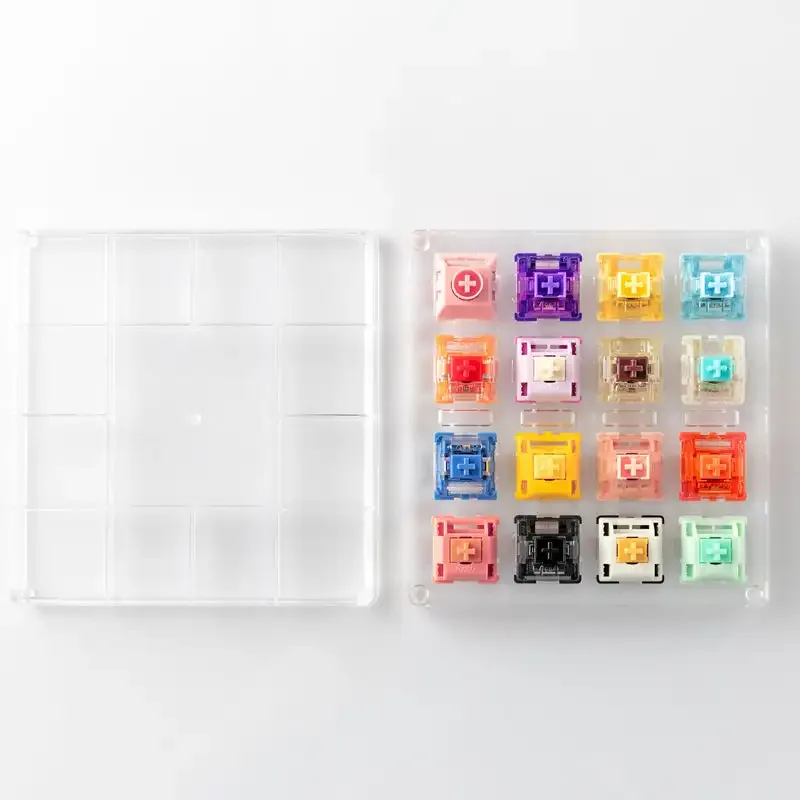
Still unsure? A switch tester puts a handful of different switches on one small plate so you can press them side by side. And if your board is hot-swap, the choice is not permanent: switches pull out and push in without soldering.